

Product design: designing products, designing identities
Throughout human history, things have been designed to improve functionality and/or to please the senses of their users. While principles of planning and design can be traced back to written sources from antiquity, product design (or industrial design) in the modern sense only developed in the 19th century in the course of the Industrial Revolution. Mass production became possible, production processes underwent an increasing division of labour, and the job of the designer emerged.
In the 20th century, design attained a significance, especially in Western societies, that can be illustrated by the influence of movements like Bauhaus or Art Deco, but also by the influence that certain products had – and continue to have – on the shaping of individual or group identities. Nowadays the ongoing influence of the “digital revolution” is changing design processes as well as the way products are received. Furthermore, the increased focus on environmental aspects have had a huge influence on (product) design and led to approaches like “sustainable design” or “eco-design”.
The following selection of titles from the National Library is intended to provide an overview of its collections on the many aspects of product design. The documents range from describing the history of product design to its applications as well as from the effects on individuals to the effects on society and the environment.
Some of the titles are part of the book display on product design in September and October 2025 on the 2nd floor of the Reading Room, while others feature in the September 2025 selection in the Discovery Area.
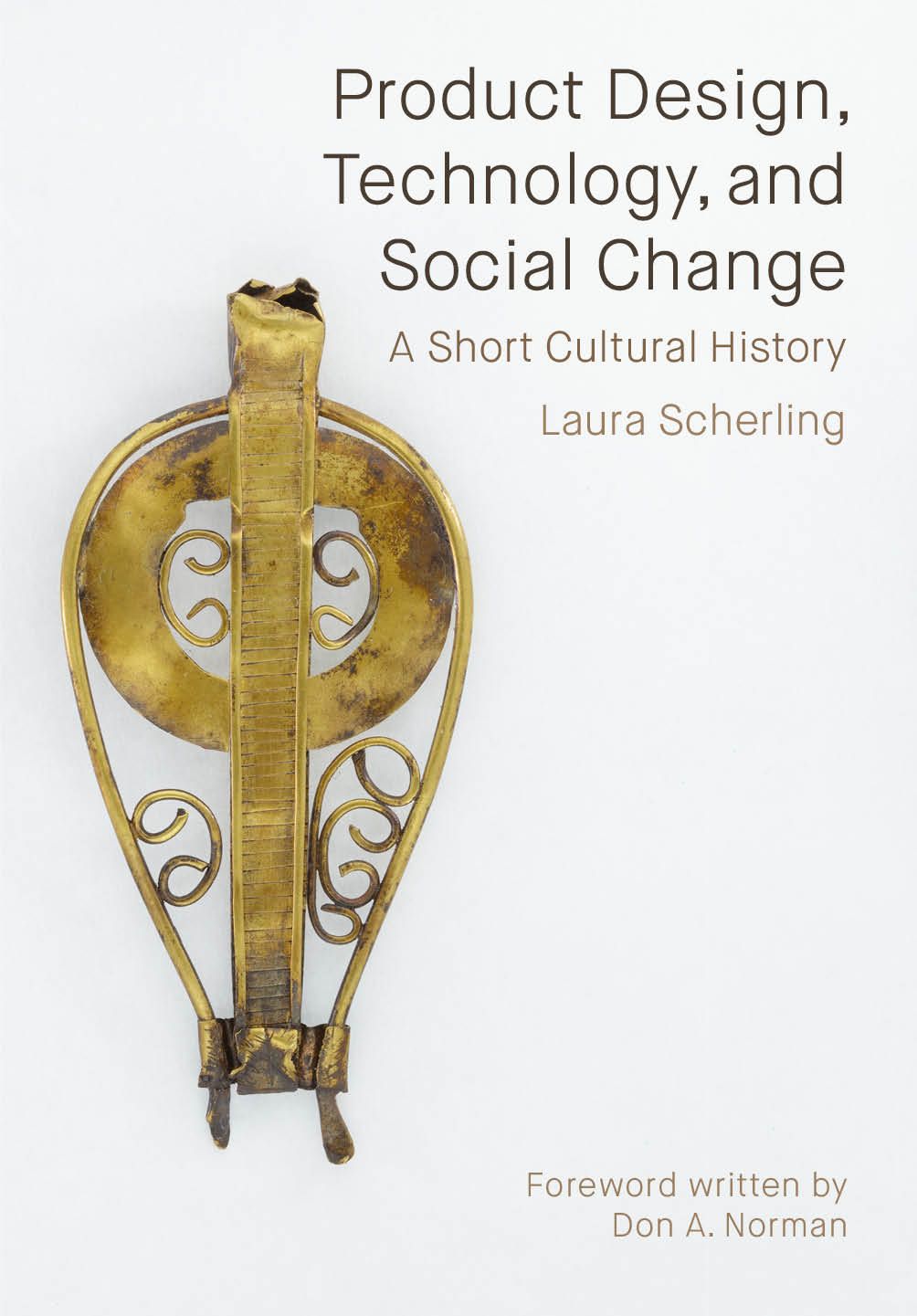
Product Design, Technology, and Social Change. A Short Cultural History
Laura S. Scherling
This book offers a concise yet comprehensive cultural history of product design, tracing its development from prehistoric times to the digital age. It examines how design has been shaped and moulded by technological innovation and social change, and how objects – from tools and furniture to digital interfaces – mediate the relationship between people and technology, influencing everyone’s daily lives. The book is divided into key historical periods, beginning with pre-industrial design and craft guilds, through industrialization and the rise of mass production, to the digital revolution and immersive technologies. The author explores the ethical dimensions of design, including labour practices, environmental sustainability, and the political implications of consumption.
She also shows how design has both empowered and marginalized communities throughout human history. Using case studies and visual examples, the book illustrates how products reflect cultural values and social movements and how designers have responded to or driven change. It challenges traditional Eurocentric narratives by including diverse perspectives and underrepresented voices. Ultimately, the book positions product design as a powerful force in shaping human experience and argues for a future where design is more equitable, sustainable and responsive to global challenges.
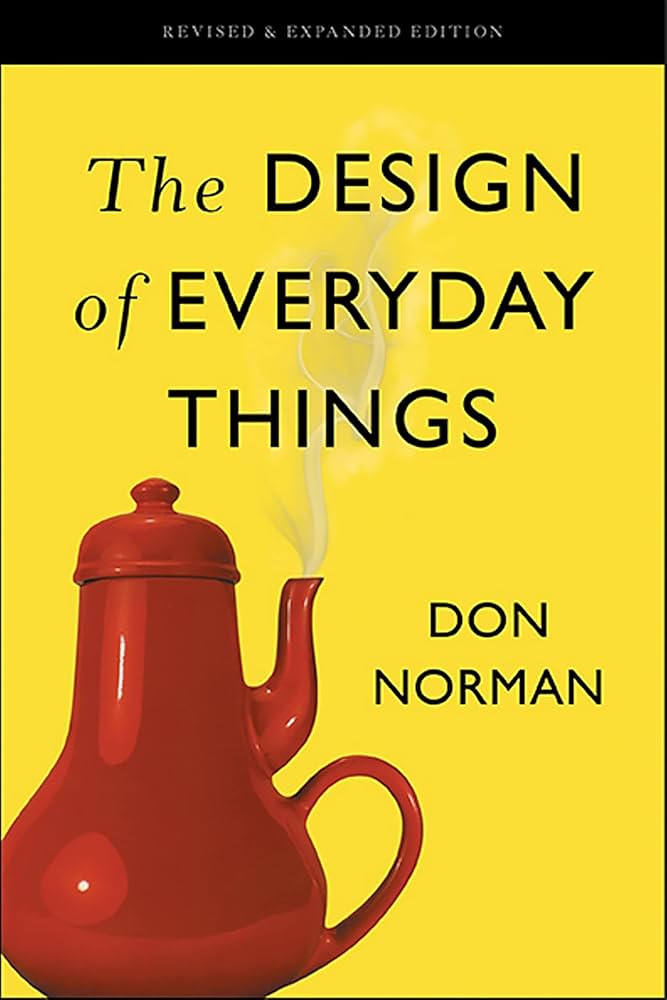
The design of everyday things
Don Norman
In this book, Donald A. Norman explores the psychology behind good and bad design. His starting point is that everyday objects should be intuitive, user-centric and functional, and therefore their design must focus on the needs and behavior of the user rather than the aesthetics or preferences of the designer. Such human-centered design involves observing real users, understanding their goals and iterating solutions based on feedback – a key concept that, like affordances, signifiers, constraints and mappings, seeks to trace how people interact with objects and how design can guide or hinder these interactions.
Mental models influence the way users form expectations about how things work, and how inconsistencies between models and actual functions can lead to errors. In this context, Norman shows that poor design is often the reason for incorrect use of an object and not the incompetence of the user. He also addresses the challenges that arise when designing complex systems and the importance of striking a balance between simplicity and functionality. This is illustrated using examples such as doors, light switches and digital interfaces to show how even simple objects can be made more user-friendly through thoughtful design. Ultimately, the book is a call to designers to be empathetic, anticipate users’ needs and develop professional solutions.
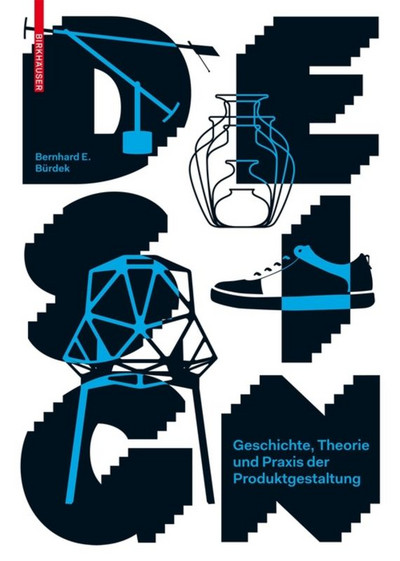
Design. Geschichte, Theorie und Praxis der Produktgestaltung
Bernhard E. Bürdek
In dieser umfassenden wissenschaftlichen Studie zum Thema Produktdesign werden u. a. die Geschichte und aktuelle Entwicklung des Produktdesigns nachgezeichnet, Prinzipien der Designtheorie und -methodik vorgestellt sowie die kommunikative Funktion von Produkten betont.
Design-Institutionen wie das Bauhaus und die Ulmer Schule für Gestaltung werden besonders untersucht, da ihr Einfluss wesentlich für grundlegende ästhetische Umwälzungen, für die Entwicklung des modernen Designdenkens sowie für das funktionale, nutzerzentrierte Design von grundlegender Bedeutung war.
Des Weiteren fokussiert sich der Autor auf die methodologischen Rahmenbedingungen, die das Design als Disziplin charakterisieren. Bürdek behandelt Design nicht nur als Handwerk, sondern als eine Form der Wissensproduktion. Er beschreibt, wie sich Designmethoden mit wissenschaftlichem Denken überschneiden, insbesondere bei der Formulierung von Hypothesen, iterativem Prototyping und Nutzer-Feedback-Schleifen. Dies macht Design zu einem semi-wissenschaftlichen Unterfangen, das Kreativität und empirische Strenge in Einklang bringt.
Ein wesentlicher Teil des Buches widmet sich der kommunikativen Funktion von Produkten. Bürdek führt das Konzept der Produktsprache und Produktsemiotik ein und argumentiert, dass Objekte über ihre Nützlichkeit hinaus Bedeutung vermitteln. Dieser semiotische Ansatz ist im Zeitalter von Branding und User Experience besonders relevant, da der symbolische Wert eines Produkts ebenso wichtig sein kann wie seine Funktion. Bürdek führt aus, wie Unternehmens- und Dienstleistungsdesign diese Prinzipien auf umfassendere Systeme ausweiten und alles von der Kundeninteraktion bis zur Unternehmensidentität beeinflussen.
In Bezug auf die Auswirkungen der Globalisierung und des technologischen Fortschritts auf das Design wird festgestellt, dass digitale Werkzeuge zwar die Möglichkeiten von Form und Funktion erweitert haben, aber auch neue ethische und ökologische Überlegungen erfordern. Der Autor plädiert für einen ganzheitlichen Ansatz im Design, der Nachhaltigkeit, Inklusivität und kulturelle Sensibilität einbezieht.
Die letzten Kapitel des Buches befassen sich mit neuen Bereichen wie Interface- und Interaktionsdesign, strategischem Design und Designmanagement. Diese Bereiche spiegeln den wachsenden Umfang der Disziplin wider, da Designer zunehmend an der Schnittstelle von Geschäftsstrategie, Systemdenken und menschenzentrierter Innovation arbeiten.
Insgesamt ist dieses Werk sowohl ein grundlegender Text als auch eine zukunftsorientierte Abhandlung für wissenschaftlich interessierte Leser. Denen bietet das Buch eine reichhaltige, interdisziplinäre Perspektive u. a. darauf, wie Design technologische, kulturelle und soziale Kräfte prägt – und von ihnen geprägt wird.
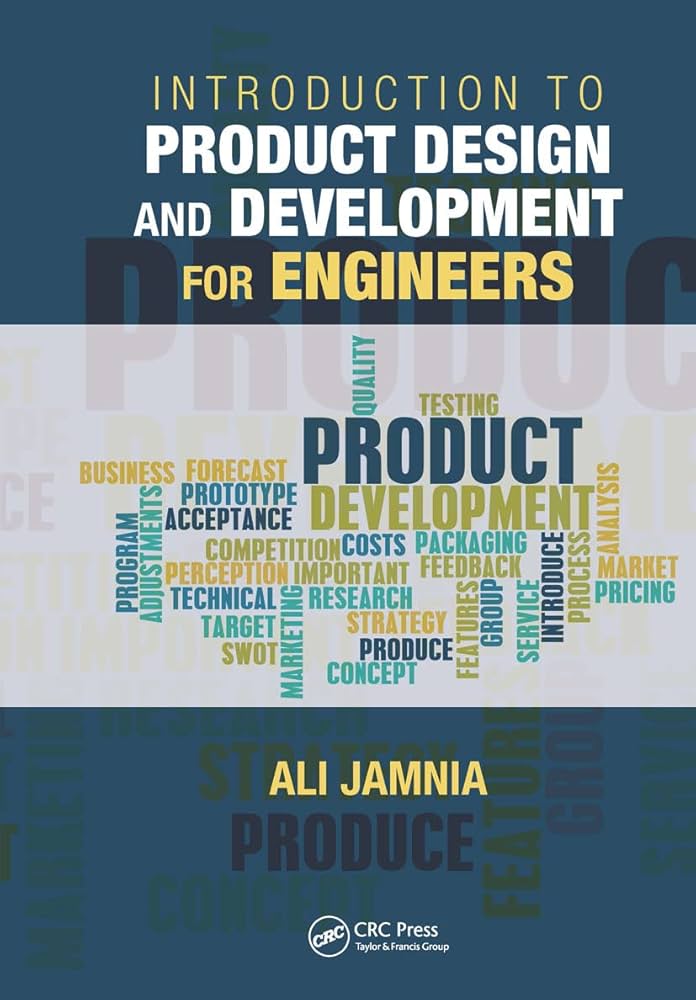
Introduction to product design and development for engineers
Ali Jamnia
This comprehensive guide takes engineering students and professionals through the entire product development lifecycle, from initial concept to product retirement. It integrates technical and business perspectives and provides actionable frameworks and checklists that can be applied directly in industry. The book begins with the non-linear processes of product development (“fuzzy front end” ) and emphasizes the importance of soft skills such as teamwork, communication and project management. It then introduces the concept of Product Lifecycle Management (PLM), which offers models and roadmaps for structuring the development process and prepares the reader for long-term responsibility for the products developed. A significant part of the book is devoted to understanding and cascading product requirements (including systems thinking, requirements development and concept selection). However, the bulk of the book is devoted to the technical aspects of the design process, covering tools such as Failure Mode and Effects Analysis (FMEA), transfer functions, 3D modeling, 2D engineering drawings, and the “Design for X” method, which ensures that products meet various performance, cost, and manufacturability criteria. The text provides guidance for the launch of a product – covering cost analysis, purchasing strategies, detailed FMEA, control plans and the processes of design verification, validation and transfer – as well as for the post-launch period – e.g. how to sustain a marketed product, manage its lifecycle and plan for its retirement.
The final section focuses on cross-discipline technical skills such as configuration management, tolerance analysis, data measurement, testing, and failure analysis. The author presents best practices as well as real-world applications and describes the integration of technical and business perspectives, making the book a practical and holistic resource for aspiring product designers and engineers, especially students working on their final projects.
Product design and sustainability. Strategies, tools, and practice
Jane Penty
Jane Penty addresses the global challenges of climate change, resource depletion, and social inequality by positioning product design as a tool for sustainable transformation. By equipping readers with both theoretical insights and practical tools, designers find inspiration to create products that are not only functional and desirable but also responsible and regenerative. Penty provides a comprehensive framework for integrating sustainability into design education and practice, emphasizing that most human consumption is mediated through products and services, making design a pivotal point of intervention. The book is structured into three main parts: concepts and context, strategies and tools, and practical applications. It begins by establishing the foundational principles of sustainability, exploring its environmental, social, and economic dimensions, and situating design within these broader systemic concerns. It then introduces an array of strategies and tools that designers can use to address sustainability, such as life cycle assessment, material selection, and energy efficiency; socially led strategies that focus on inclusivity, user empowerment, and ethical production; and economically led strategies that consider circular economy models, product longevity, and value creation. Finally, real-world case studies across sectors – such as packaging, electronics, furniture, and transportation – illustrate how these strategies can be applied in practice, highlighting both challenges and innovative solutions.
This comprehensive reference text is not an easy-to-read book, but supported by several interviews with practitioners, real-world examples, and over 300 illustrations it especially gives design students, practitioners and educators a lot of information and inspiration for the broad topic of sustainability in product design.
The Making of Design. From the First Model to the Final Product
Edited by Gerrit Terstiege
This book offers a rare window into the often unseen and complex processes behind modern product design. Rather than relying on abstract theory, Terstiege assembles 25 real-life case studies to explore how designers move from first ideas to final, manufacturable objects. Through interviews, sketches, renderings, and prototypes, readers witness firsthand the complexity of design as both a creative and technical undertaking. A central insight is that design is not linear; it evolves through iteration, critical feedback, failure, and adaptation. Early hand-drawn sketches give way to computer models and testable prototypes, each step raising new questions about materials, function, aesthetics, and user interaction. The importance of prototyping is underscored throughout; models are not merely representations but thinking tools that shape both the form and the rationale of the product. Terstiege also highlights how advances in materials science and manufacturing – such as CNC machining, 3D printing, and novel composites – open up new possibilities and challenges for the designer. These changes force continual negotiation between technical feasibility, cost, performance, and design intent. Design is shown to be a dialogue: between designer and client, between idea and constraint, and often between the past and possible futures. The book also includes philosophical reflections from leading figures like Dieter Rams, who speak to the ethical dimensions of design: creating with restraint, sustainability, and timelessness in mind. Rams’ vision of “good design” as being unobtrusive, functional, and durable stands in quiet contrast to more flamboyant or trend-driven approaches, reminding readers that aesthetics and responsibility are not mutually exclusive. Rather than offer a universal methodology, the book emphasizes that successful products emerge from tailored strategies shaped by team dynamics, stakeholder input, technical realities, and evolving contexts. This makes the book particularly valuable to professionals and scholars interested in the cognitive, material, and social dimensions of creative work. For the scientifically inclined reader, it functions as a compelling empirical dossier – rich in data, variation, and insight – on how tangible innovation actually occurs in the design world.
Design and heritage. The construction of identity and belonging
Edited by Grace Lees-Maffei and Rebecca Houze
Wang presents a structured approach to integrating cultural identity into product design by developing a knowledge base of cultural symbols and applying them systematically in the design process. He argues that cultural codes – visual, material and symbolic elements rooted in local traditions – can be used to create products that are not only aesthetically distinctive, but also economically and socially meaningful. Wang proposes a methodology that begins with the extraction and classification of cultural elements from local history, folklore and material culture, which are then translated into design components through semiotic analysis and scenario-based modeling. This process aims to preserve cultural heritage while increasing the market appeal of creative products. The book emphasizes the importance of scenario-based exhibitions as platforms for testing and refining these culturally embedded designs and shows how storytelling and contextual presentation can enhance user engagement and product consumption.
Through case studies and theoretical discussions, the book shows how cultural codes can be operationalized in design education and practice, providing designers with tools to navigate the tension between tradition and innovation. It emphasizes the role of interdisciplinary collaboration and combines insights from anthropology, semiotics and industrial design to provide a flexible yet rigorous framework for culture-based creativity. Wang positions cultural codes not as static references, but as dynamic resources that can evolve through thoughtful reinterpretation, enabling designers to create products that are both contextually anchored and globally relevant.
Matériaux pour un design produit éco-responsable
Daniel Liden
Cet ouvrage de référence aide les concepteurs et les ingénieurs à prendre en compte les aspects environnementaux dans leur choix de matériaux. En tant que spécialiste de l’éco-conception, Daniel Liden propose une approche méthodique et documentée pour prendre des décisions basées sur la durabilité en tenant compte des contraintes techniques, économiques et environnementales. Il commence par un aperçu des technologies de production et de recyclage, qui offrent une base solide pour comprendre le cycle de vie des matériaux. Liden explique, sous forme de fiches techniques, les propriétés, les avantages et l’impact environnemental d’une large gamme de matériaux, classés par famille : plastiques (neufs, recyclés, biosourcés), textiles (naturels, synthétiques, recyclés), métaux (à faible teneur en carbone, recyclés), céramiques, verre, bois et papier. Chaque fiche technique contient des informations précises sur l’origine, la transformation, la recyclabilité et la performance environnementale des matériaux, facilitant ainsi un choix éclairé.
En outre, l’auteur met en lumière les technologies émergentes telles que la capture du carbone, le recyclage chimique des plastiques ou les composites mono-matériaux, qui ouvrent de nouvelles perspectives pour une conception plus circulaire. Dans l’ensemble, l’auteur souligne l’importance d'une approche systémique, dans laquelle le choix des matériaux ne se limite pas à leur composition, mais s’inscrit dans une stratégie globale de réduction de l’impact environnemental.
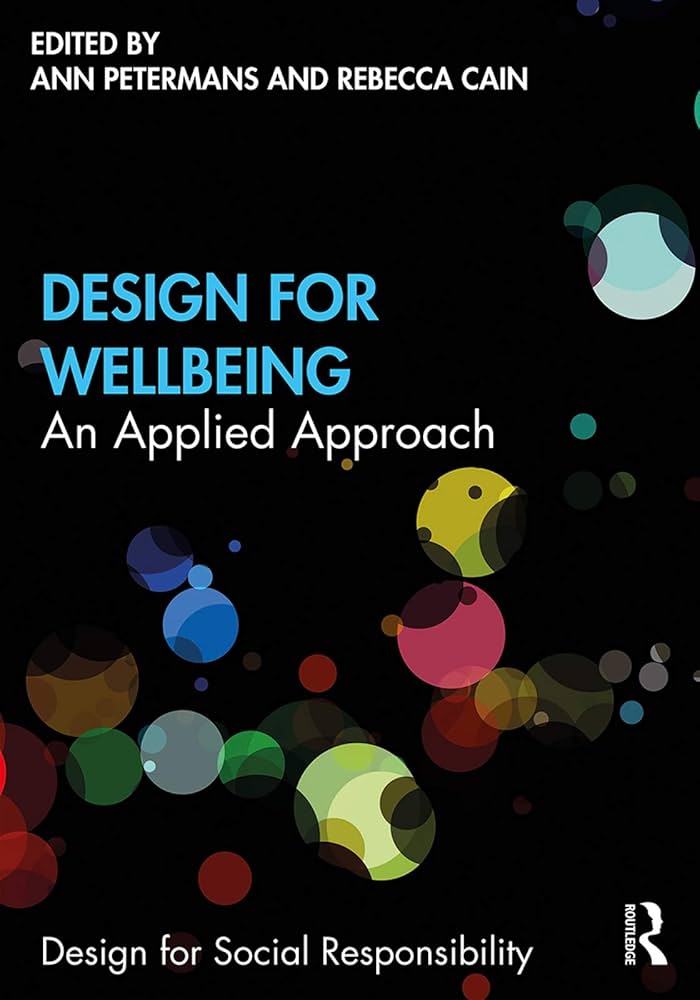
Design for wellbeing. An applied approach
Edited by Ann Petermans and Rebecca Cain
In this book the development and application of design research is showcased that should help to improve people's personal and societal wellbeing and happiness. It brings together contributions from leading international academics and designers to highlight the latest thinking and research on the design of products, technologies, environments, services and experiences for wellbeing.
Part I begins with the conceptualization of wellbeing and takes a detailed look at the emergence of the “design for wellbeing” movement. In part II design for wellbeing in practice is introduced through a wide range of products, environments and services. Among other things, we see emerging trends in designing interiors and urban spaces to promote wellbeing, designing to enable and support connectedness and social interaction, and designing for behaviour change to address unhealthy eating behaviours in children. Significantly, there is a growing body of work on subjective wellbeing, Design for Happiness, and several case studies are presented on how design can help promote people's wellbeing. Part III offers practical guidance through a range of examples of tools, methods and approaches, while in part IV the book concludes with a look at the future challenges for design for wellbeing.
This collected edition provides students, researchers and practitioners with a detailed assessment of design for wellbeing, taking a distinctive global approach to design practice and theory in context, and elaborating the broader contribution of design to society, culture and the economy.

Digital Transformation in Design. Processes and Practices
Edited by Laura S. Scherling
Digital technologies are changing the field of design in all its disciplines. With contributions from designers, researchers and educators, this edited collection emphasizes that the digital transformation is not just a technical upgrade, but a profound change in the way design is conceived, practiced and taught. The articles explore the digitization and datafication of products and services and show how user experience, artificial intelligence and virtual environments are redefining design processes. The authors emphasize that these changes are not limited to tools or outcomes, but also include the ethical, social and pedagogical dimensions of design. Case studies and interviews with practitioners shed light on how design education and practice are adapting to the new technological realities. It is essential for designers to develop future-oriented skills and critical perspectives that go beyond mastering software. Furthermore, the digital transformation requires a rethinking of the role of design in society, therefore practices that are not only innovative but also responsible and inclusive are needed. The book’s interdisciplinary perspective provides a rich empirical and conceptual framework for understanding how design is evolving in response to the technological revolution, and making this work a valuable resource for scholars, students and professionals dealing with the complexity of contemporary design.
Last update