

The four points of the compass. The unexpected history of direction
Jerry Brotton
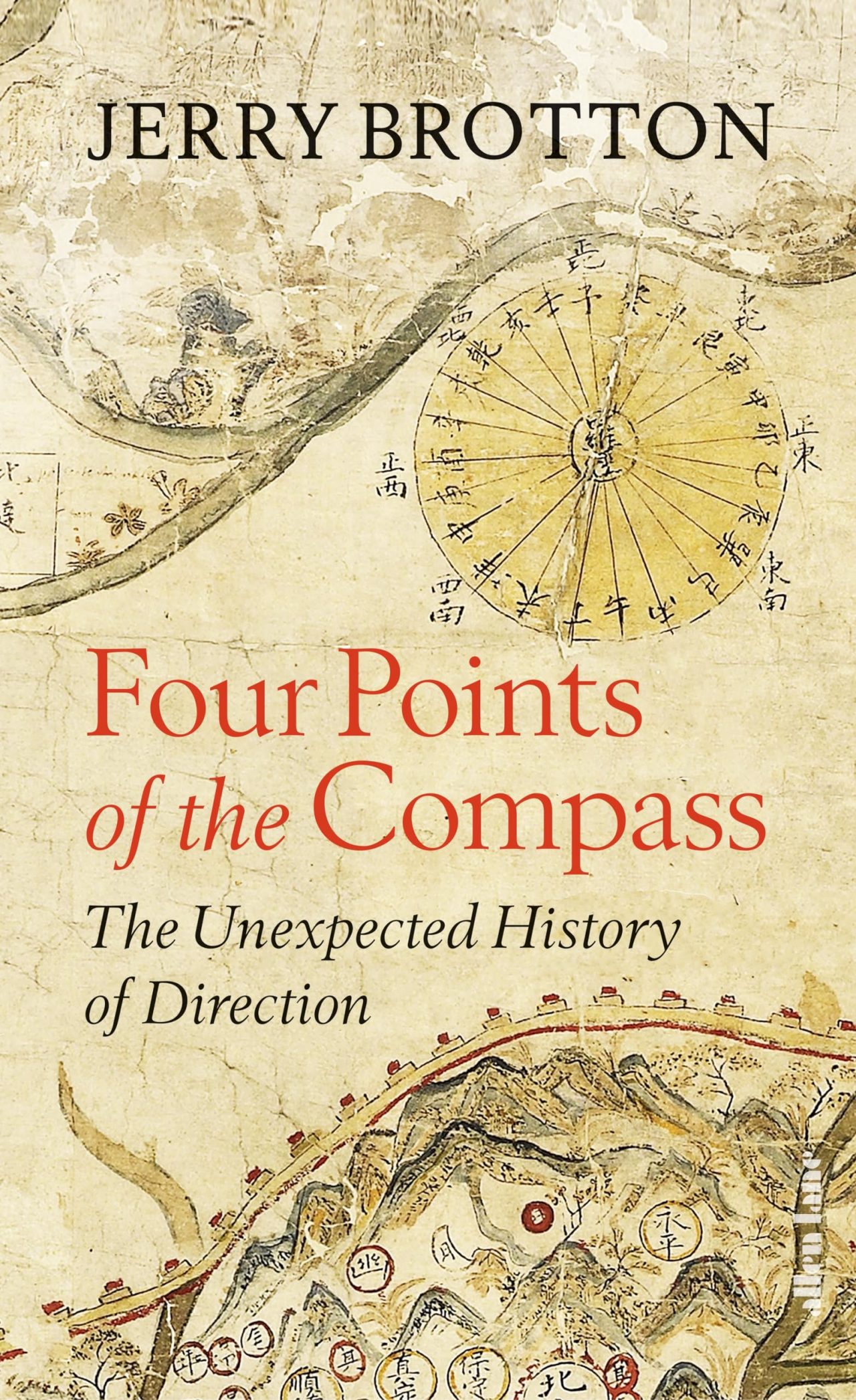
This book by the historian and writer Jerry Brotton is about the four cardinal directions and the significance they have beyond navigation and exploration and which vary across cultures. The knowledge they all have in common is that they provide orientation and help people find and understand their place in the world. However, as explained by the author, also differences can be seen throughout history. He devotes a separate chapter to each of the four cardinal directions, describing their different and sometimes highly complex symbolic, metaphorical and political meanings which shaped people’s lives at certain times and in certain cultures.
The book concludes with a chapter on the significance of the “blue dot” for life in the digital age. As a combination of online maps and smartphone technology it now puts the user in the centre, so that the original meaning of directions loses relevance today. According to the author, this even leads to the addition of another cardinal direction, namely the “You”, which is becoming increasingly important. But the author only touches on the consequences of such an attitude, which distances people from the world around them and encourages egocentricity and hints at new directions that political and economic powers may give to the world in a near future.
More to discover
À découvrir aussi
-

The Origins of Judaism. An archaeological-historical reappraisal
Yonatan AdlerWhen did Judaism become Judaism? More precisely, when did the dietary and purity laws, circumcision, the Sabbath regulations, holidays, etc. become the hallmarks of Jewish religious identity? Reviewing the available textual and archeological evidence, Yonathan Adler, associate professor in the...
-

Anwälte des Autors. Zur Geschichte der Herausgeberschaft im 18. und 19. Jahrhundert
Erika ThomallaErika Thomallas Studie Anwälte des Autors. Zur Geschichte der Herausgeberschaft im 18. und 19. Jahrhundert untersucht die Entwicklung der Herausgeberschaft vom frühen 18. bis zum späten 19. Jahrhundert. Ausgangspunkt der Untersuchung ist die These, dass Texte nicht allein durch ihre...
-

Une forêt
Jean-Yves JouannaisAu lendemain de la Seconde Guerre mondiale, en Allemagne, alors que se déroulent les grands procès liés à la dénazification, Jacob Michael Lenz, avocat et capitaine dans l’armée américaine, se voit confier une affaire aussi insolite qu’inattendue. Dans une forêt...
-

Modèle animal : 200 ans de photographie
éd. Nathalie HerschdorferDepuis les débuts du médium, l’animal a été présent dans l’image photographique. Ce livre étudie cette histoire de la représentation animale – d’abord objet, puis sujet – à l’occasion du bicentenaire de la photographie, cette année. Structuré en sept axes...
Last update